Back to Blog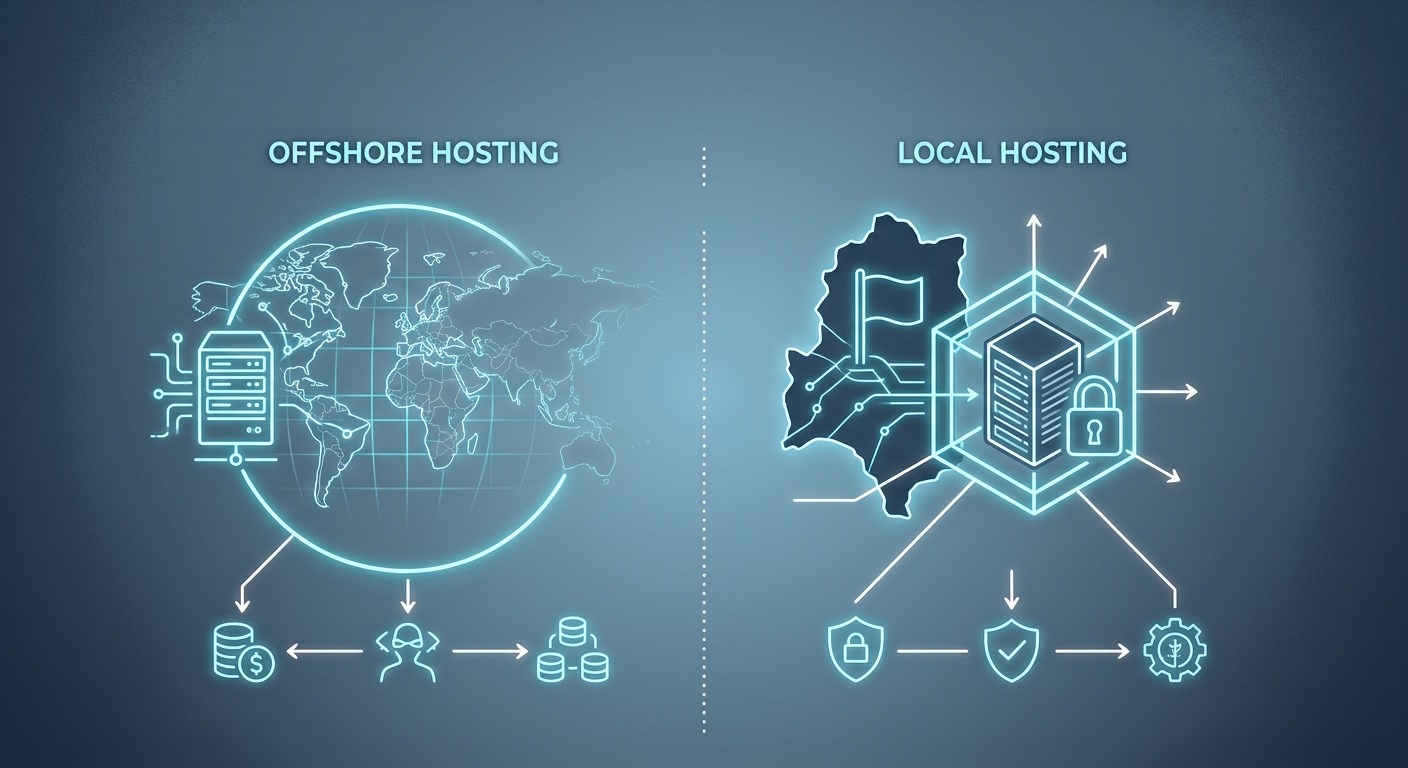



Monica Jansen
Sep 7, 2026
Offshore Hosting vs Local Hosting: Key Differences
Where you choose to host your website can make more of a difference than you might think.
Keeping your hosting local and moving it offshore both come with their own considerations.
The differences go beyond physical location. Privacy, legal environment, content policies, costs, and other factors all vary depending on where your hosting is based.
If you’re deciding which approach would be a better fit for you, read on to see how offshore and local hosting compare in the areas that matter most.
Key Differences Between Offshore and Local Hosting
While both options serve the same basic purpose, the way they work in practice can differ.
Server Location
The most obvious difference is where the server hosting your website is physically located.
With local hosting, that server is in the same country as you or your business, while offshore hosting places it abroad.
Choosing a server location carefully is important, as the country you host in affects many of the other aspects we will cover below.
Target Audience and Reach
Your target audience is another factor to consider.
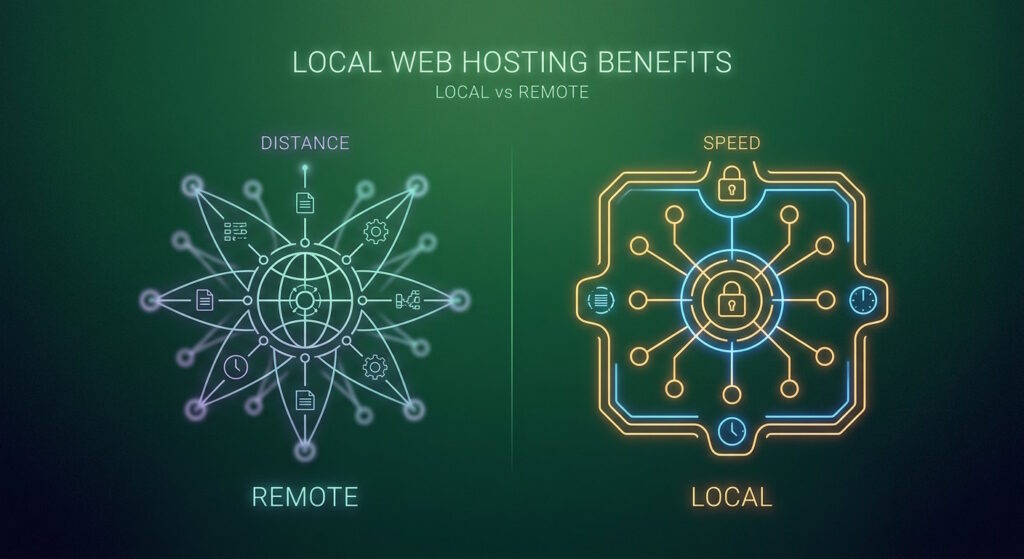
Local hosting keeps your server close to a local audience. It can reduce latency and provide faster access for visitors in that market.
On the other hand, offshore hosting gives you more flexibility to reach audiences located abroad.
Example
For example, if your business is based in Asia but primarily targets a European audience, you can choose to host your website on a server in Europe.
If you also have visitors in other parts of the world, a Content Delivery Network (CDN) can help reduce latency and maintain reliable performance across locations.
In short, offshore hosting offers greater freedom to reach audiences in different countries and markets.
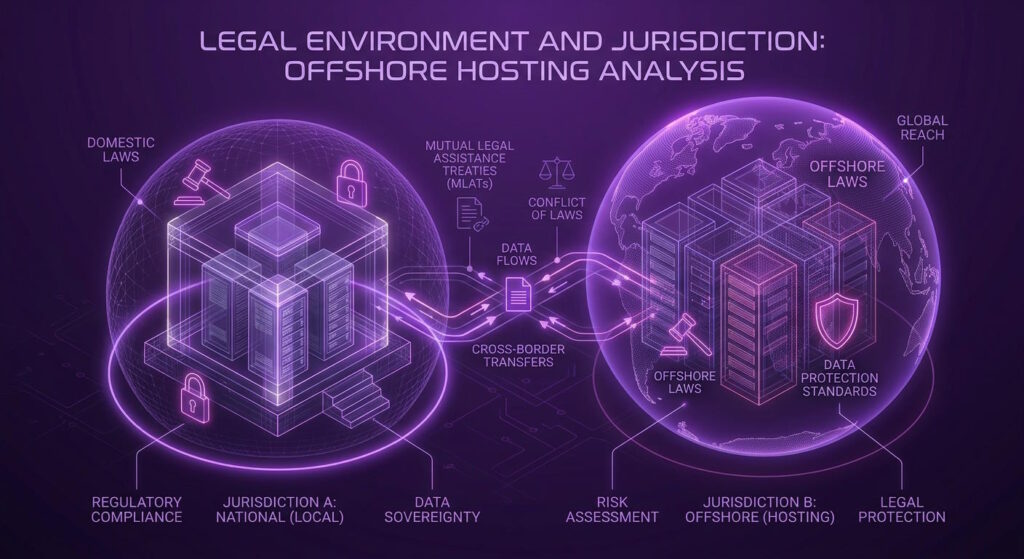
Legal Environment and Jurisdiction
Countries and jurisdictions have different laws in place when it comes to data protection, privacy, and online content.
Thus, your hosting location determines the legal framework your website needs to operate in.
With local hosting, your website remains within the legal environment of your own country.
That may make the applicable laws more familiar, but it also means you are limited by the protections and restrictions they impose.
Alternatively, offshore hosting allows you to choose another jurisdiction.
Example
You can opt for a more flexible or lenient legal environment, or simply one that better aligns with your website and business needs.
However, hosting your website abroad doesn’t necessarily mean that only the laws of that country apply.
In fact, regulations connected to where your business operates and where your users are located may still need to be considered.
Privacy and Data Protection
Privacy protections can vary significantly between jurisdictions, particularly in terms of how personal data is stored, accessed, and disclosed.
Local
Local hosting places your data under the privacy protections available in your home country.
Depending on local regulations, your hosting provider may be required to retain certain information or disclose it following certain legal requests.
Offshore
When it comes to offshore hosting, it can provide stronger safeguards in jurisdictions with stricter privacy and data disclosure laws.
That can mean greater protection for both website owners and their users, although the exact level of privacy depends on the country and hosting provider.
One thing to keep in mind is that regulations can extend beyond the hosting location.
For example, GDPR may still apply when processing data of people residing in the EU even if the website is hosted elsewhere.
Content Policies and Restrictions
Online content is treated differently around the world.
Some countries impose more limitations on what can be published, while others take a more flexible approach to takedown requests.
With local hosting, your website has to follow the rules and removal procedures in your own country. These can affect what you are allowed to publish and how your provider responds to complaints.
In contrast, offshore hosting gives you more choice over the rules your website operates under.
You can opt for a country and provider whose policies align with what you publish, which can be particularly valuable for independent publishers and news websites.
Performance
Server location plays a role in performance, but distance alone doesn’t determine how well a website runs.
The quality of the infrastructure, network connections, and available resources all matter as well.
It Depends On the Infrastructure
Local hosting can provide fast performance for nearby visitors, especially when the hosting provider has strong infrastructure in your area.
With offshore hosting, you can access hosting infrastructure in other markets.
Your options can include stronger connectivity, modern data centers, or resources your website needs, even if they are not currently available in your own country.
Cost
Hosting prices can be substantially different from country to country due to:
- Infrastructure costs
- Energy prices
- Taxes
- Local market conditions
Local hosting follows the pricing of your home market.
Depending on where you are based, that may be relatively affordable or more expensive compared to other locations.
Access Different Prices
Going offshore opens up markets with different price levels.
You may be able to get the same hosting resources at a lower cost by choosing a country with lower operating expenses.
However, offshore hosting isn’t always the cheaper option.
Some locations have premium infrastructure and higher operating costs, so ultimately the price will depend on the country, provider, and plan you choose.
Who Should Consider Local Hosting?
Local hosting works well for businesses that mainly operate and serve customers in one country.
Some common examples include:
- Small businesses
- Local service providers
- Regional e-commerce stores
It can also be the right choice when local regulations require certain data to stay within the country. Keeping your hosting local makes meeting these requirements more straightforward.
Additionally, you may already have everything you need close to home.
If the available infrastructure, pricing, and services meet your needs, there may be little reason to look elsewhere.
Overall, local hosting makes the most sense when your website, audience, and business needs are tied to your home market.
Who Should Consider Offshore Hosting?
Offshore hosting is worth considering if your website or business has needs that extend beyond your home country.
Often, that includes businesses targeting:
- International markets
- Independent publishers
- High-traffic websites that need scalability
Privacy can be another reason to go offshore.
Websites handling sensitive data or looking for stronger privacy protections may benefit from hosting in a country that better supports those priorities.
The same applies if local content rules, infrastructure, or pricing don’t meet your requirements. Hosting abroad gives you access to alternatives that may be a better match.
All in all, offshore hosting is the right fit when you need greater control and more flexibility than your local market can provide.
Conclusion
Both offshore and local hosting come with their own advantages and limitations.
Neither is universally better, as the right option depends on your website, business, and what you want to achieve.
Local hosting offers the familiarity of operating within your existing market, along with easy access to local infrastructure and regulations.
On the other hand, offshore hosting provides greater freedom to reach international markets, operate under more flexible laws, or benefit from stronger privacy protections.
Understanding what matters most to you will help you determine which option is a better fit for your business.
After all, the best hosting option is the one that meets your needs and gives your website the right foundation to succeed.
Author
Monica Jansen
Monica Jansen is a seasoned tech writer focused on web hosting and cybersecurity. She loves doing deep dives and whittling down difficult topics into simple and succinct concepts. Whether she is covering firewalls or different hosting plans, she always strives to provide clear guides that website owners of all skill levels can follow.
Add your comment
Get content delivered straight to your inbox



Your data.
Your choice.
Work with the best of the best — your projects deserve it.