Back to Blog


Monica Jansen
Oct 14, 2026
Benefits of Private AI
AI can process enormous amounts of data, but not all of it belongs in a public environment.
Sensitive information, proprietary data, and internal resources often require tighter control over where they are stored and who can access them.
Private AI offers a way to maintain that control without giving up the capabilities AI provides.
So, how can you benefit from this approach? Let’s take a closer look.
- What Is Private AI?
- What Are the Benefits of Private AI?
- Are There Any Drawbacks?
- Who Is Private AI For?
What Is Private AI?
Private AI refers to AI systems that operate in a dedicated, controlled environment.
The organization using the system has direct oversight of how its data is processed, stored, and accessed.
These systems can operate on-premises or in a private cloud, with access restricted to authorized users.
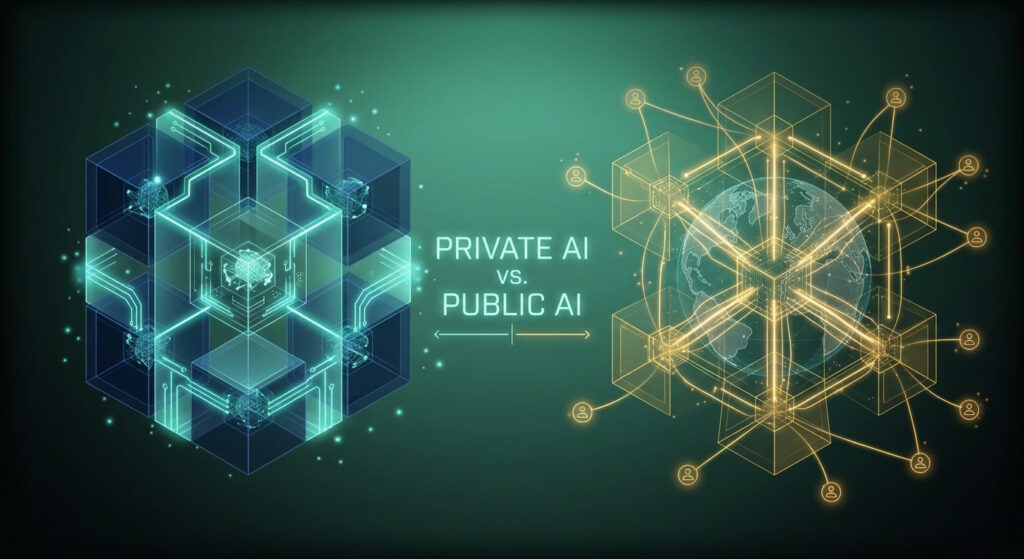
Private AI vs. Public AI
Public AI services typically run on infrastructure managed by an external provider.
Data entered into these systems is processed outside the user’s own environment, which can expose sensitive or proprietary information to third parties.
With a private system, the information remains within a dedicated setup instead.
Ultimately, the key difference comes down to who controls the data and where it is processed.
What Are the Benefits of Private AI?
As AI has become more involved in business operations, protecting the information it relies on is a growing priority.
Private AI helps address these concerns by offering several key benefits.
Data Privacy
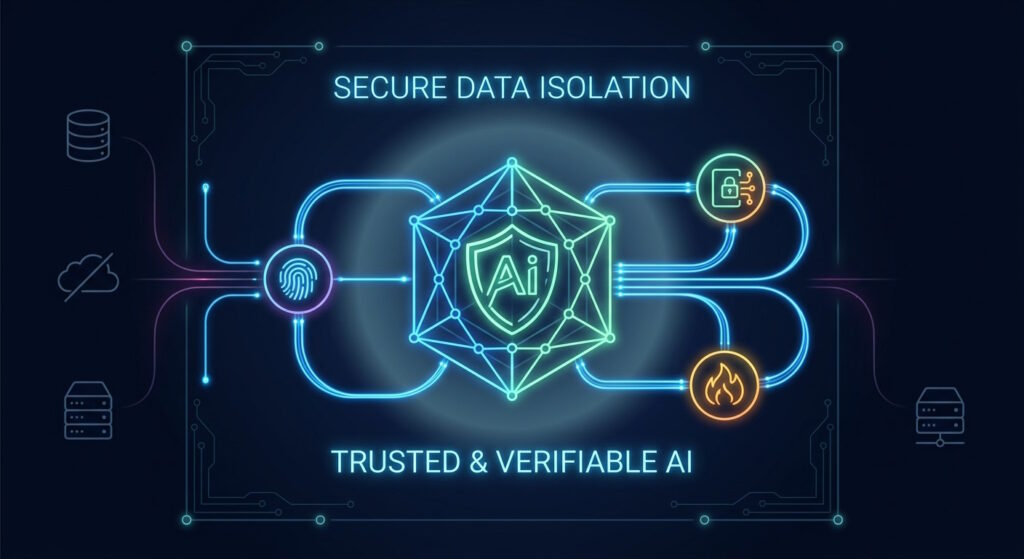
To start, keeping data within a dedicated AI environment limits its exposure to external services.
Information stays in the systems reserved for the business rather than being sent to third-party AI providers for processing.
This includes information employees enter into prompts, upload as files, or otherwise provide while using AI.
Keeping these interactions within the same system means sensitive material doesn’t have to pass through additional platforms.
For companies working with confidential records, customer details, or other sensitive material, reducing outside exposure can significantly lower privacy risks.
Data Control
Next, private AI gives businesses more say over how their data is managed throughout its lifecycle.
They can set their own rules for storage, access, retention, and deletion instead of being bound by external policies.
Having this level of control also makes it easier to decide exactly how information can be used by AI systems and who is permitted to work with it.
In practice, rules can vary according to the purpose or sensitivity of the data.
For example, customer records and internal documents may have separate retention periods or restrictions on how they can be used.
Security
Similarly, a dedicated setup allows businesses to tailor security measures to their specific requirements.
Authentication and encryption can protect the AI system and the information it handles, while monitoring can help identify suspicious activity.
Security policies can also be applied consistently across the entire setup, making it easier to respond to potential threats.
Moreover, these protections can align with existing company practices, including how users are authenticated, which connections are permitted, and what activity is monitored.
Thus, greater visibility into the environment can help teams investigate unusual behavior if an incident occurs.
Regulatory Compliance
Regulatory requirements often call for clear oversight of how AI systems operate and how information is protected.
With private AI, businesses have more visibility into these processes, allowing them to document the measures they have in place.
This oversight can extend to where information is stored and processed, helping address requirements related to:
- Data residency
- Retention
- Authorized access
It can be particularly important when records must remain within a specific jurisdiction or be handled under defined conditions.
Audit logs and internal records can provide evidence that required safeguards are being followed, thus helping organizations demonstrate compliance when needed.
As regulations evolve, having authority over the setup can also make it easier to adjust relevant policies and processes.
Intellectual Property Protection
Another benefit is that AI systems may work with valuable assets such as:
- Internal research
- Source code
- Product designs
- Trade secrets
A controlled AI environment lets companies put these resources to use without sending them to public AI services.
Therefore, proprietary knowledge can support AI-assisted research, development, analysis, and other internal work while remaining under the company’s control.
Retaining intellectual property within the organization’s own systems reduces the risk of confidential knowledge being disclosed, reused, or incorporated into external AI models.
Consequently, companies can make broader use of their own expertise and materials while avoiding unnecessary exposure through public AI applications.
Customization
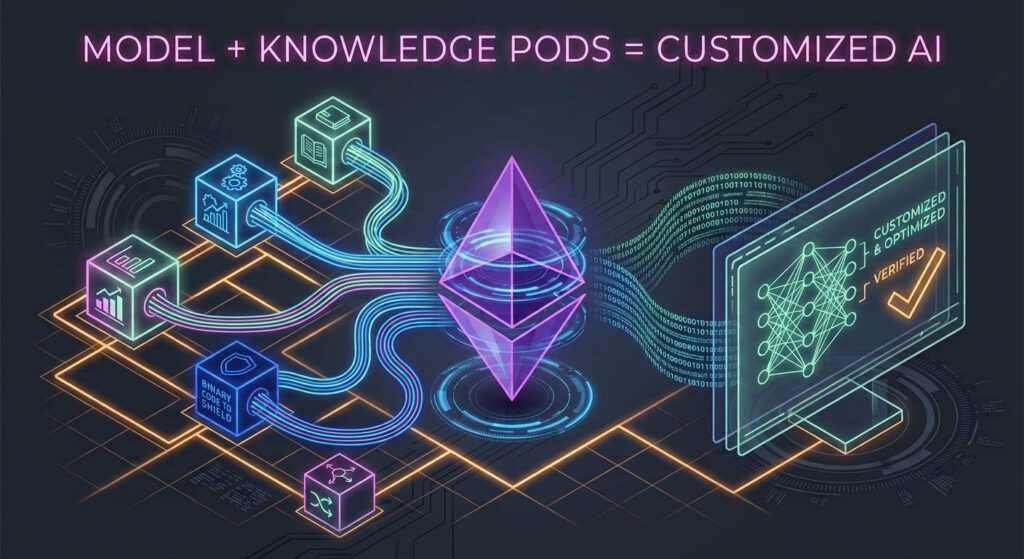
A private AI model can be tailored to understand the context in which a business operates.
Training or fine-tuning it on relevant internal knowledge can make the system better suited to its intended tasks.
Beyond the model itself, businesses can configure:
- How the system behaves
- Which functions it supports
- How it fits into existing workflows
For that reason, it is possible to build AI around a specific role rather than adjusting business processes to fit a general-purpose tool.
Companies can continue refining the model as their requirements evolve, rather than being limited to the functionality and updates determined by a public AI service.
Performance and Accuracy
Last but not least, private AI can produce outputs that are better aligned with the business using it.
Models can be optimized for a narrower set of tasks rather than covering a broad range of unrelated requests, and later deployed efficiently.
In turn, this focused scope can improve consistency and make it easier to evaluate results against defined expectations.
Having more relevant information to work with can also reduce inaccurate or generic responses, making the results more useful in day-to-day operations.
Regular evaluation can reveal weak points and guide further improvements as the system is used over time.
Are There Any Drawbacks?
The advantages of greater control often come with a more complex implementation.
For example, setting up the necessary infrastructure can require a larger initial investment in computing resources.
Additionally, managing private AI can be more challenging than relying on a public service.
Staff may need the right technical expertise to maintain the system, manage its resources, and address issues as they arise.
For organizations able to handle these responsibilities, the benefits of private AI can far outweigh the challenges involved.
Who Is Private AI For?
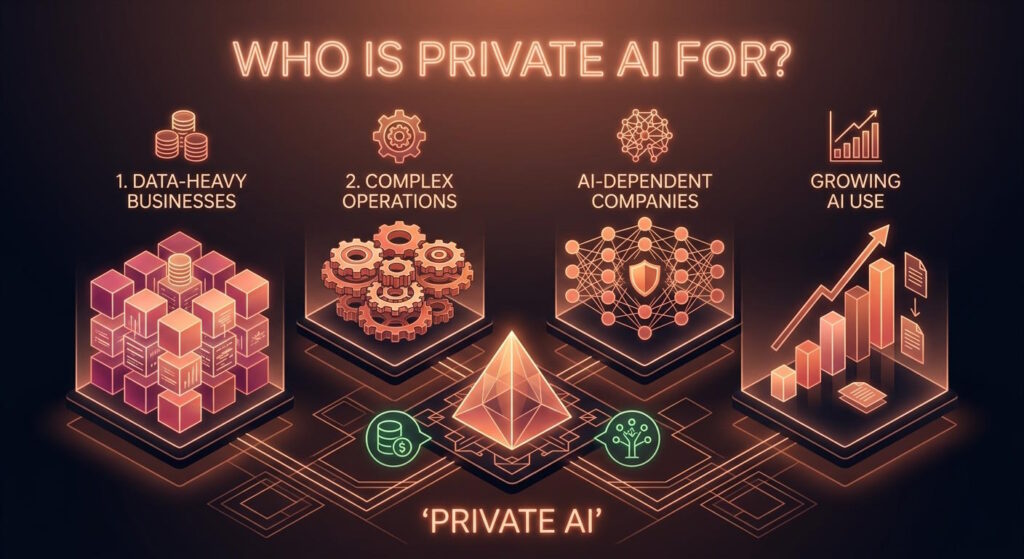
Private AI can suit many organizations, but its advantages become particularly relevant when AI is closely tied to their data, processes, or everyday operations. Some examples include:
- Data-heavy businesses: Companies working with large amounts of internal or customer information can make that data available to AI without routinely transferring it to external services.
- Complex operations: Specialized workflows may not fit neatly into general-purpose AI services, while a private system can be configured around existing processes and infrastructure.
- AI-dependent companies: When AI supports core products or everyday operations, greater authority over how it is run can reduce reliance on the provider’s policies, functionality, or availability.
- Growing AI use: As AI expands across teams and applications, a common setup can support new use cases without introducing separate tools for each one.
Conclusion
Private AI gives organizations greater authority over how AI fits into their operations and what happens to the information involved.
While this approach can require more resources and expertise, the added control can be particularly important when AI works closely with sensitive data, specialized processes, or core operations.
Ultimately, private AI makes it possible to take advantage of AI on terms that better reflect the organization’s own priorities and requirements.
Author
Monica Jansen
Monica Jansen is a seasoned tech writer focused on web hosting and cybersecurity. She loves doing deep dives and whittling down difficult topics into simple and succinct concepts. Whether she is covering firewalls or different hosting plans, she always strives to provide clear guides that website owners of all skill levels can follow.
Add your comment
Get content delivered straight to your inbox
Your data.
Your choice.
Work with the best of the best — your projects deserve it.