Back to Blog



Monica Jansen
Oct 23, 2026
Navigating The Legal Landscape of Offshore Hosting
Offshore hosting can offer more privacy, flexibility, and control over where your data is stored.
At the same time, hosting your website abroad doesn’t mean leaving legal obligations behind.
Different legislations can apply to your content, data, and business activities, sometimes across more than one jurisdiction.
Understanding your obligations helps you take advantage of the benefits of offshore hosting while staying compliant with the relevant laws.
Read on as we break down the key legal components you should know.
Is Offshore Hosting Legal?
The short answer is yes, offshore hosting is legal. Individuals and businesses can host their websites and data in another country.
However, the location of your server doesn’t determine whether everything you do online is legal. Laws can still apply based on your activities, location, or the markets you operate in.
For example, businesses in regulated industries may need specific licenses regardless of where their websites are hosted.
Similarly, international sanctions can create restrictions, such as limits on providing services or processing payments involving sanctioned countries, organizations, or individuals.
Ultimately, offshore hosting changes where your data and infrastructure are located, not whether you have legal responsibilities. The exact obligations depend on which jurisdictions apply to you.
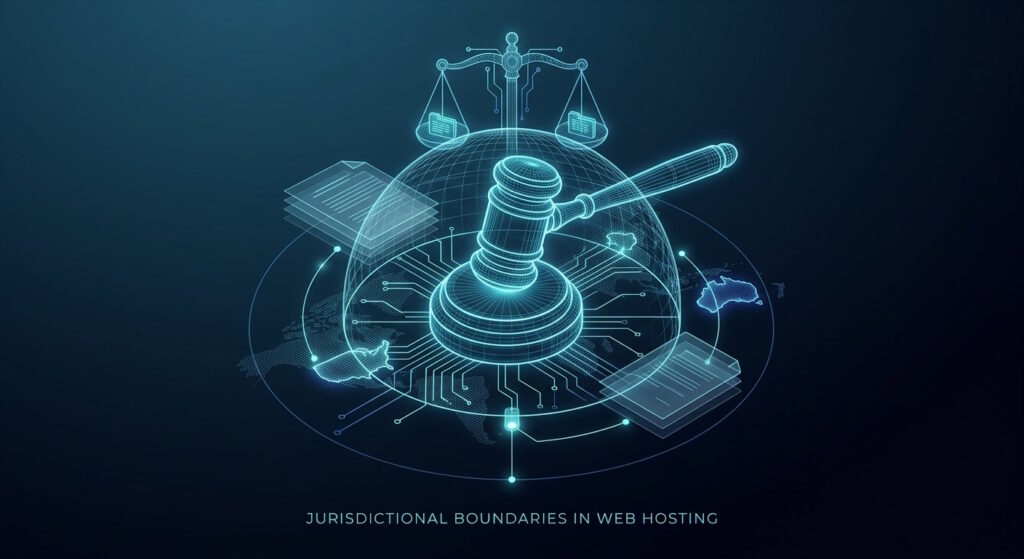
How Jurisdiction Works
Its laws can affect how data is handled, what content can be hosted, and how providers respond to legal requests.
Even so, you may still have obligations in the country where you or your business operates.
Additionally, legal responsibilities can extend to the people you serve.
Certain laws apply when you collect data or provide services to users in specific regions, even if your website is hosted elsewhere.
Example
Think of it as ordering a product from a company abroad. The seller may operate under the laws of its own country, while rules in yours can still determine what can be imported or sold to you.
Offshore hosting works in a similar way. Therefore, hosting your website in another country doesn’t necessarily mean that only its laws apply.
Legal Areas to Consider
Hosting across borders can affect everything from how information is handled to what authorities can require from a provider.
The rules surrounding these areas are worth looking at individually.
Data Privacy and Protection
To start, privacy laws set rules for how personal data is collected, stored, processed, and shared.
With offshore hosting, your hosted data is stored across national borders. As such, the way it is handled needs to meet the relevant data protection requirements.
One common example is the GDPR. Businesses outside the EU can still fall under its rules when handling the personal data of people in the EU.
Another consideration comes from cross-border data transfers. Depending on the destination, transferring personal data abroad can require specific safeguards to protect it.
Therefore, privacy-friendly hosting laws alone are not enough. The way you manage personal data throughout its lifecycle matters as well.
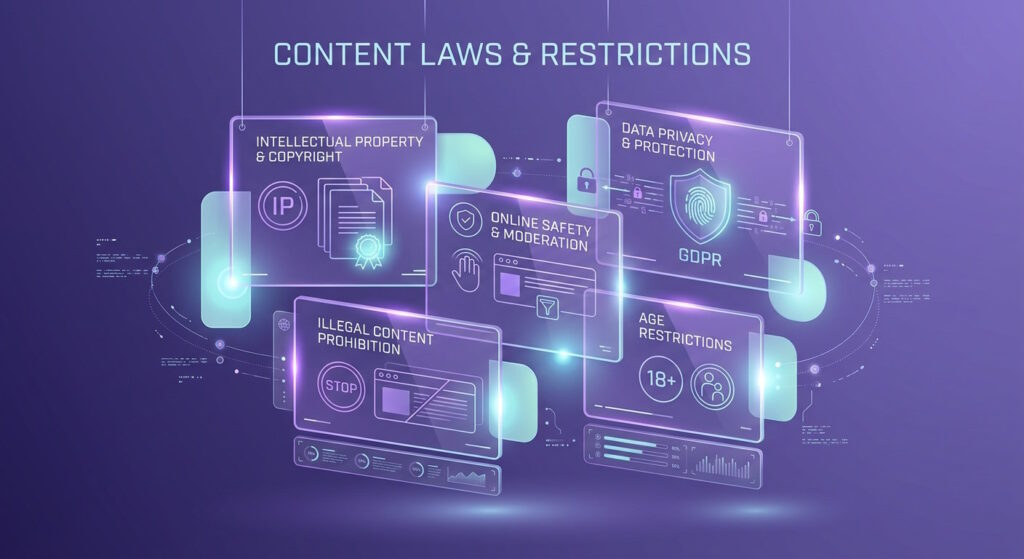
Content Laws and Restrictions
However, greater freedom doesn’t mean that anything can be hosted. Each jurisdiction still sets boundaries on what it considers illegal or restricted.
For example, online gambling is prohibited in some countries, while others allow it under specific licensing requirements.
Rules can also cover areas such as:
- Defamation
- Hate speech
- Politically sensitive content
In the same way, hosting providers can impose their own restrictions. Their terms of service or acceptable use policies may prohibit content even when local law does not.
Thus, both the laws of the hosting country and the provider’s policies shape what you can publish.
Copyright and Intellectual Property
Similarly, intellectual property rights can affect the content published on an offshore-hosted website.
Copyright protects the following original materials from unauthorized use:
- Text
- Images
- Videos
- Software
Trademarks, on the other hand, can protect brand elements such as names and logos.
Naturally, problems can arise if a website uses protected material without the owner’s permission.
In such cases, the rights holder may request its removal or take legal action against the person or business responsible.
However, the process for handling infringement claims also differs between jurisdictions.
Example
For instance, the US has a formal notice-and-takedown system for copyright under the DMCA, while other countries follow their own laws and procedures.
At the same time, hosting providers can have their own processes for intellectual property complaints or violations of their terms.
As a result, choosing an offshore location doesn’t make protected material free to use. What can differ is how a claim is made, handled, and enforced.
Government Access and Surveillance
Next, the hosting country’s laws determine the circumstances under which authorities can request access to stored data.
In practice, providers may be required to disclose information in response to:
- Court orders
- Warrants
- Other legally recognized requests
Beyond direct requests, some countries require certain types of data to be stored for a set period, while others place fewer retention obligations on providers.
Surveillance laws can go even further. Depending on the country, authorities may have powers to monitor communications or collect information for purposes such as national security.
Ultimately, these differences can make some jurisdictions more attractive than others for website owners who prioritize privacy.
Industry-Specific Regulations
In addition, certain industries are subject to legal requirements that go beyond the general rules that apply to online businesses.
Businesses operating in areas such as gambling, financial services, or pharmaceuticals may need licenses or regulatory approval to offer their services in particular markets.
Crucially, hosting offshore doesn’t bypass the licensing rules that apply to a regulated business.
Namely, a financial services company may still need authorization to serve customers in a particular country even if its website is hosted elsewhere.
Beyond licensing, regulations can set specific requirements for:
- Customer verification
- Record-keeping
- Handling of sensitive information
For this reason, businesses in regulated industries need to consider the rules governing their activities separately from those governing their hosting infrastructure.
Tax and Business Obligations
Finally, hosting a website abroad doesn’t automatically change where a business has tax or reporting obligations.
These are generally connected to factors such as where the business is registered, operates, or earns income rather than simply where its server is located.
In essence, moving a website to an offshore server doesn’t move the company or change its tax residence by itself.
Aside from tax obligations, companies operating across borders may need to register, file reports, or meet other obligations in the countries where they conduct business.
In short, server location and business location are not the same thing. Hosting offshore can bring you new obligations while those tied to where your business operates still remain.
Managing Legal Risks
Handling the legal side of offshore hosting effectively requires taking a proactive approach.
Here are some practical steps you can take to identify potential risks early and stay compliant:
- Seek legal advice: Consult professionals familiar with the relevant jurisdictions for guidance on the obligations that may apply to your website or business.
- Conduct regular audits: Review your data protection measures, content policies, and reporting practices to uncover gaps before they become a problem.
- Stay informed: Follow regulatory developments in the countries relevant to your operations and adjust your practices as requirements change.
- Choose a reputable provider: Look into how the provider handles legal requests and complaints, including its track record in dealing with disputes.
- Review the provider’s terms: Check the content restrictions and acceptable use policies before publishing so your content stays within the rules.
Conclusion
Offshore hosting opens up opportunities, but making the most of them means understanding the rules that come with operating across borders.
Legal requirements can overlap, differ between jurisdictions, and evolve over time.
Staying informed and reviewing your practices regularly can prevent small oversights from becoming bigger problems.
With the right precautions in place, offshore hosting can offer its advantages without putting your website or business at unnecessary legal risk.
Author
Monica Jansen
Monica Jansen is a seasoned tech writer focused on web hosting and cybersecurity. She loves doing deep dives and whittling down difficult topics into simple and succinct concepts. Whether she is covering firewalls or different hosting plans, she always strives to provide clear guides that website owners of all skill levels can follow.
Add your comment
Get content delivered straight to your inbox



Your data.
Your choice.
Work with the best of the best — your projects deserve it.