Back to Blog



Monica Jansen
Oct 29, 2026
Why Businesses Are Moving to Private AI
AI has become part of everyday business operations.
Companies are increasingly connecting it to real workflows, internal data, and systems that play an important role in how they operate.
With AI taking on a bigger role in business, private AI is emerging as an alternative to relying entirely on external services.
Read on to find out what is driving this shift and why more businesses are choosing private AI.
- Public AI Limitations
- Why Private AI Is Gaining Traction
- Private AI Considerations
- Industries That Benefit Most
Public AI Limitations
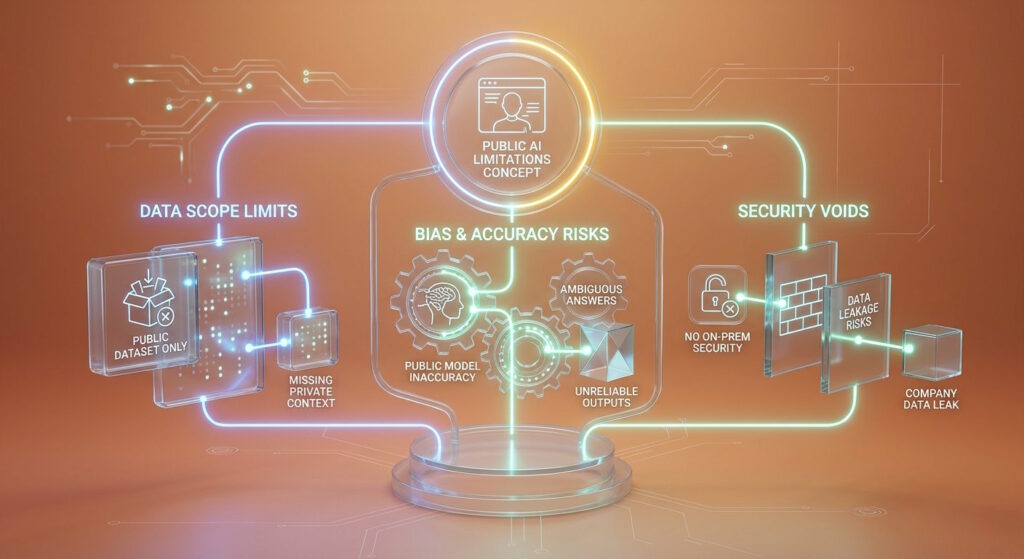
Public AI tools have made it easier for businesses to experiment with AI without having to build their own infrastructure.
However, this convenience comes with trade-offs that can become more significant as businesses start depending on AI for more of their operations.
For one, organizations have limited control over the environment behind a public AI service.
How data is processed, where it is handled, and how the service itself operates largely depend on the provider.
Public tools are also designed to serve a broad range of users.
As a result, they may not always accommodate company-specific workflows, internal systems, or governance requirements without additional integration or customization.
The more a business relies on AI, the more factors such as control, predictability, and independence from an external service come into play.
For businesses reaching that point, private AI offers greater authority over the environment in which their AI systems operate.
Why Private AI Is Gaining Traction
The move toward private AI is not driven by a single concern.
Businesses are weighing everything from how their data is handled to the long-term cost and flexibility of the AI systems they depend on.
Here are some of the main factors pushing businesses toward private AI:
Internal Data
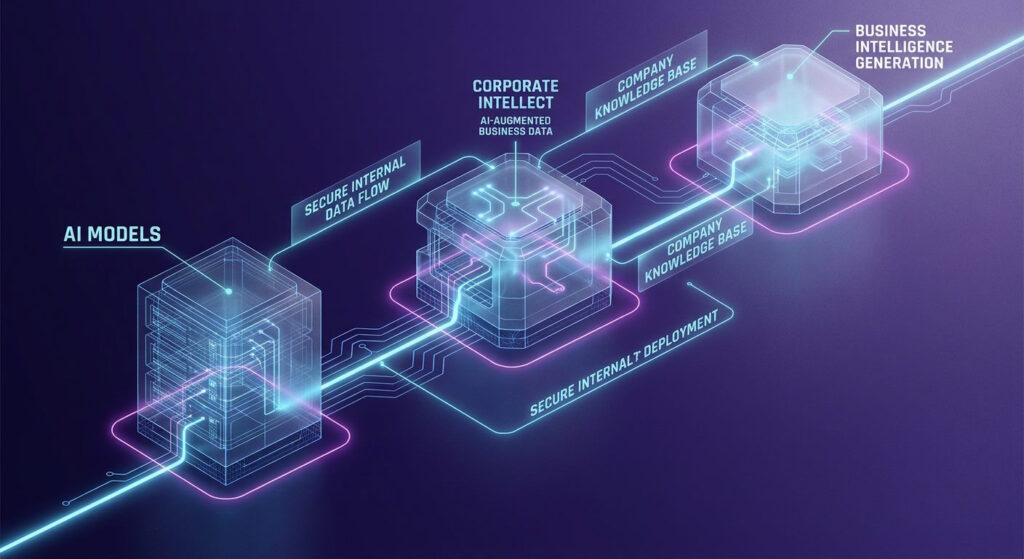
Firstly, AI systems can provide more relevant results when they have access to information specific to a business.
Thus, companies are increasingly connecting them to internal documents, customer records, proprietary research, and other business data.
However, sending sensitive or proprietary information to external AI services means processing it on third-party infrastructure, where it may be exposed to unauthorized access.
As AI workloads involve more internal data, keeping it on infrastructure the business controls is a bigger priority.
Operational Dependence
Next, businesses are relying on AI for a growing number of important processes.
Customer service, forecasting, data analysis, and software development are just a few examples.
Therefore, disruptions to an external AI service can interfere with the workflows built around it and affect day-to-day operations.
For companies that rely heavily on these systems, such risks create a stronger case for moving critical AI workloads to private infrastructure.
Regulatory Pressure
Additionally, businesses face stricter requirements around how AI and the data it processes are managed.
Regulations can impose rules on areas such as data residency, transparency, and accountability.
When AI services are managed by an external provider, companies may have less visibility into where information is processed or how certain decisions are made.
That’s why regulatory pressure is influencing where businesses run their AI, particularly when close oversight or specific data-handling requirements apply.
Rising AI Costs
Moreover, the economics of AI change as adoption expands across a business.
Public services often charge according to the number of tokens processed or requests made.
At a larger scale, these recurring fees can become a significant operating expense. Costs can also be harder to predict when demand varies between teams and workloads.
If demand is consistently high, running models privately can make spending more predictable and reduce reliance on usage-based pricing.
Technological Advances
At the same time, private AI has become easier to deploy and manage.
Advances in AI infrastructure and software have simplified tasks such as running models and connecting them to company data.
In addition, tools for monitoring and managing AI systems have improved, reducing the specialized resources and custom development needed to operate AI privately.
Businesses now have more options for running capable models within their own environments instead of relying entirely on public AI platforms.
Provider Flexibility
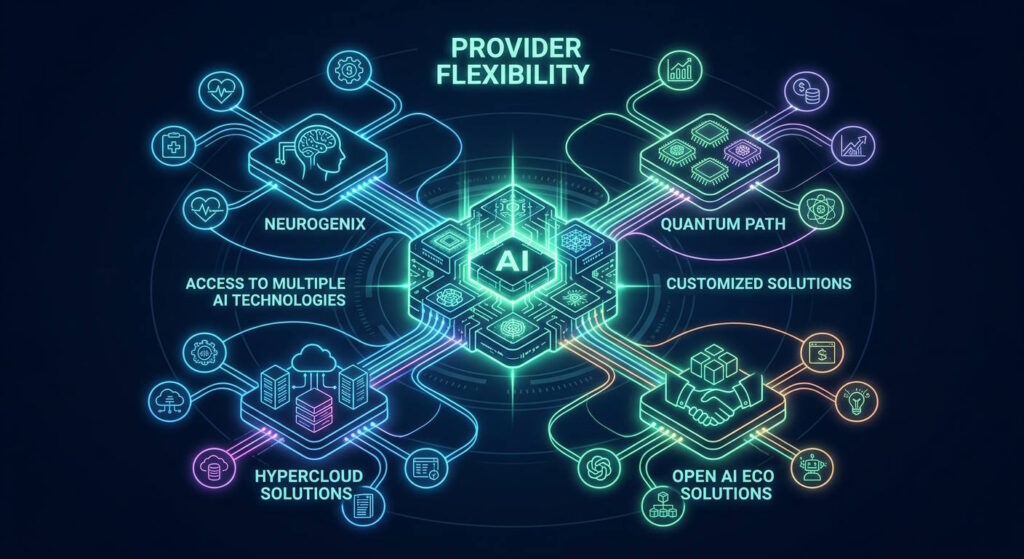
Lastly, building AI systems around a single provider can make moving to a different one difficult.
For example, switching may require changes to existing integrations or applications designed for specific models.
Over time, differences in pricing, policies, and available features can further complicate the move.
Thus, businesses are turning to private AI setups that give them more freedom to choose and change the models they run.
Private AI Considerations
Private AI can be implemented in different ways depending on its intended purpose and the business using it.
Before choosing an approach, the setup needs to match three key areas:
Deployment Options
To start, private AI can be self-managed or run as a managed service. The main difference is who provides and maintains the technical environment.
With a self-managed setup, the business provides the computing resources and handles maintenance internally.
Therefore, it is better suited to companies that already have the hardware and technical expertise to support their AI workloads.
Alternatively, a managed service leaves much of the technical work to the provider, so the business can run AI in a dedicated environment without supplying and maintaining the underlying infrastructure.
Data Readiness
Next, the information connected to private AI needs to be accurate, relevant, and up to date.
Giving the system access to more data doesn’t necessarily improve its results if the information is outdated or contradictory.
For example, an internal support assistant should rely on current policies and company documentation. In addition, older versions need to be removed or separated to avoid inaccuracy.
With that in mind, businesses need to determine which data the AI needs before connecting it to the system.
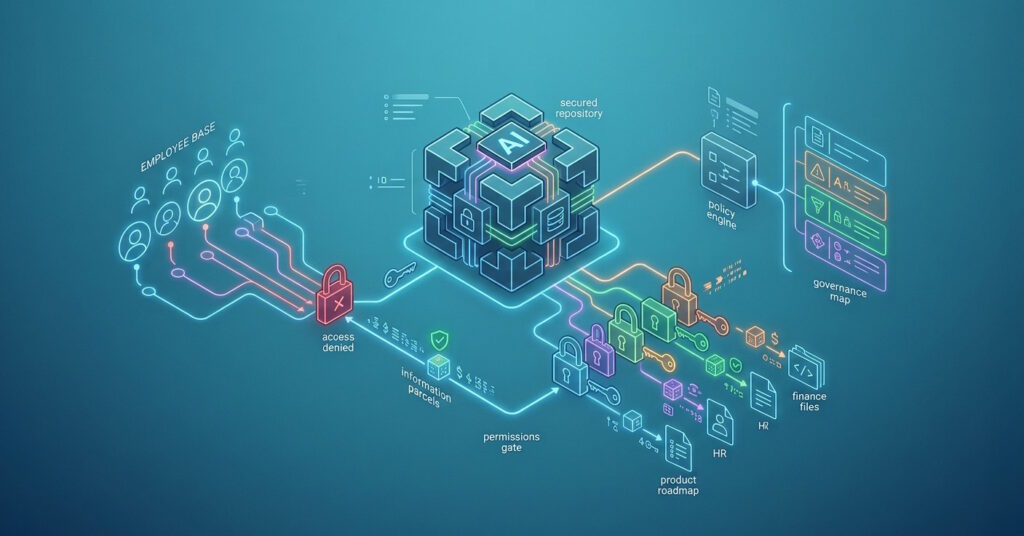
Access and Governance
Finally, access to private AI should follow the permissions already in place within the organization.
Connecting information to AI doesn’t mean every employee should be able to retrieve it.
For instance, an HR team may work with employee records that other departments aren’t authorized to view. The same restrictions should apply when that data becomes accessible through AI.
Beyond access, businesses need clear rules for how the system can be used. Internal policies can define approved use cases and establish who is responsible for overseeing AI usage.
Industries That Benefit Most
Private AI can be valuable across different sectors, but certain industries have particularly strong reasons to adopt it. That includes:
- Healthcare: Patient information is highly sensitive, making private AI particularly relevant for dealing with medical data.
- Financial services: Strict regulatory requirements call for close oversight of AI systems and the data they process.
- Legal services: Confidentiality is central when AI is used to work with client information, contracts, or case materials.
- Manufacturing: Proprietary processes and production knowledge can make sending internal data to public AI platforms undesirable.
- Tech companies: Source code and intellectual property often form part of AI workflows, increasing the importance of keeping them within a controlled environment.
Conclusion
Private AI is becoming a more realistic option as businesses integrate AI deeper into their operations.
What once required substantial technical resources is now within reach for a much wider range of companies.
At the same time, greater reliance on internal data and AI-powered workflows is changing what businesses expect from the systems they use.
Privacy, flexibility, and long-term sustainability are becoming harder to separate from the decision of where and how AI runs.
In the end, businesses are choosing private AI to build a foundation for using AI on their own terms.
Author
Monica Jansen
Monica Jansen is a seasoned tech writer focused on web hosting and cybersecurity. She loves doing deep dives and whittling down difficult topics into simple and succinct concepts. Whether she is covering firewalls or different hosting plans, she always strives to provide clear guides that website owners of all skill levels can follow.
Add your comment
Get content delivered straight to your inbox



Your data.
Your choice.
Work with the best of the best — your projects deserve it.