Back to Blog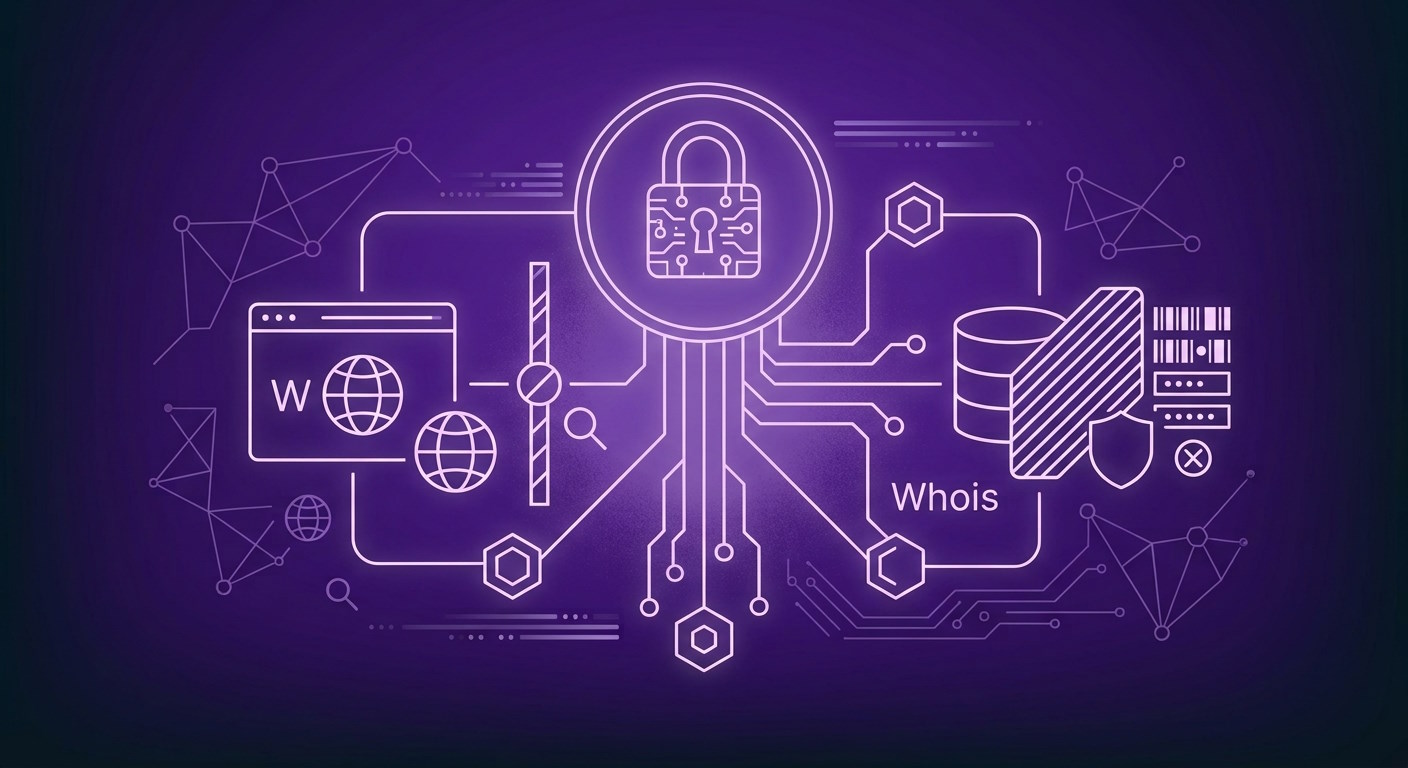


Monica Jansen
Sep 22, 2026
Do I Need Domain Name Privacy Protection?
Online privacy has become increasingly important, with plenty of tools and measures designed to protect it.
Domain name privacy protection is one way to limit how much of your personal information is exposed when you register a domain. But how much protection does it actually provide?
In this guide, we’ll explain what it does, the risks it can help reduce, and whether you actually need it.
- What Is Domain Name Privacy Protection?
- Risks of Not Using Domain Name Privacy Protection
- When Domain Privacy Isn’t an Option
- Common Domain Privacy Myths
- Do I Need Domain Privacy Protection?
What Is Domain Name Privacy Protection?
When you register a domain, you provide your registrar with contact information, such as your name, email, phone number, and address.
Domain name privacy protection keeps your personal details hidden by masking them with proxy information in public records, while keeping your actual ones on file.
You still own and control your domain, but someone looking it up cannot find your name or contact details.
What Domain Privacy Doesn’t Do
Domain privacy has a specific purpose, so it shouldn’t be confused with broader website security or online anonymity.
Your IP address and browsing activity are also outside of its scope, just like any other information you choose to publish online elsewhere.
These require separate privacy and security measures, which domain privacy can support, but not replace altogether.
Risks of Not Using Domain Name Privacy Protection
Leaving your personal details publicly accessible can do more than simply reveal who owns a domain.
Once that information is available, it can be collected and used in ways that put both your privacy and security at risk.
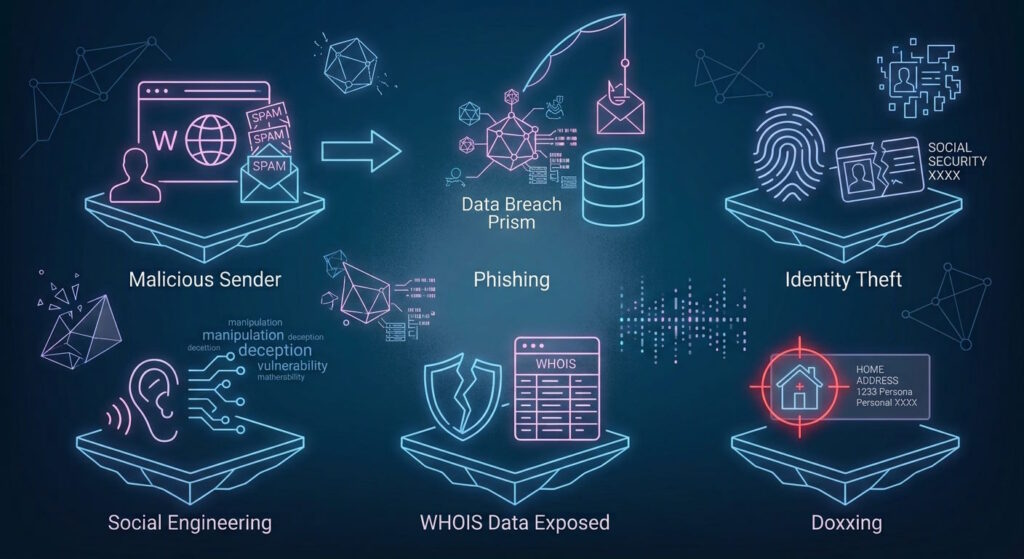
Spam and Unwanted Contact
Having access to your contact information gives spammers, marketers, and other third parties multiple ways to reach you.
You could receive unsolicited emails, phone calls, messages, or even physical mail.
Phishing and Targeted Scams
Scammers can use what they know about you and your domain to create more convincing phishing attempts.
Instead of relying on generic messages, they can tailor their approach and make it appear more legitimate.
For example, they could pose as your registrar or hosting provider and contact you with a fake renewal notice or payment request.
Identity Theft and Impersonation
Access to personal details can make it easier for someone to steal your identity or impersonate you.
With the right information, attackers could answer security questions or convince a company that they are dealing with you.
Additionally, they can create fake accounts or websites in your name.
Social Engineering and Domain Hijacking
Attackers can exploit publicly available ownership details in social engineering attempts against your registrar.
They could use that knowledge to falsely claim authority over your domain, potentially gaining access to the account or initiating a fraudulent domain transfer.
While domain privacy doesn’t secure the domain on its own, it hides the details associated with the owner and removes information that could support this type of attack.
Business Targeting and Competitive Intelligence
Seeing who registered a domain can reveal the owner before the website is made public.
Competitors can use these connections to uncover upcoming projects, new brands, or other activity before you are ready to announce it.
For businesses managing multiple domains, registration records can expose links between separate products, services, or ventures that were not intended to be publicly connected.
Taken together, they can reveal business activity and future plans, which competitors can use for corporate espionage.
Doxxing and Harassment
Domain information can provide material for doxxing, where someone deliberately publishes your personal details without your consent.
If you use your home address to register your domain, you could be particularly at risk, as exposing it can turn online harassment into a real-world safety concern.
When Domain Privacy Isn’t an Option
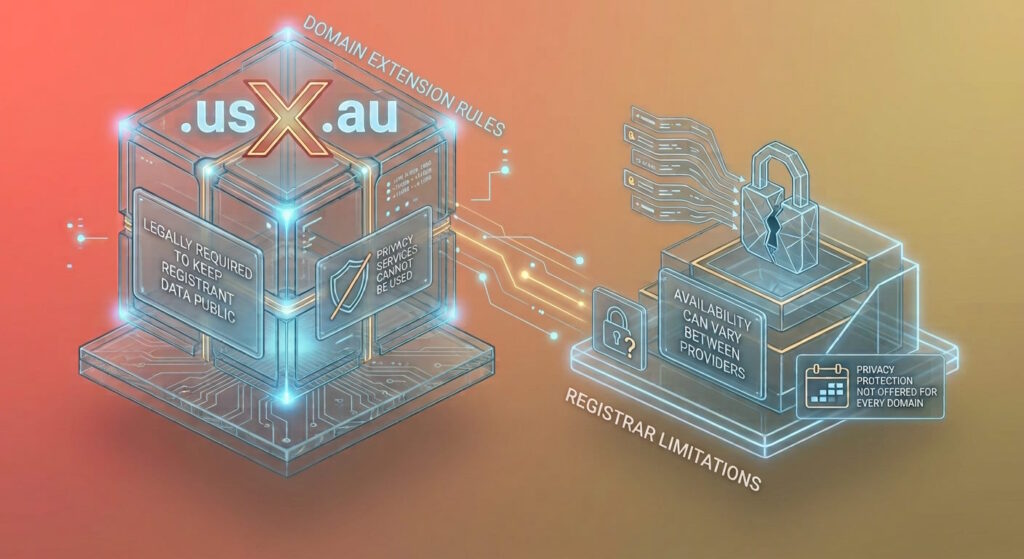
Domain privacy is widely available, but there are cases where its use is not permitted, or certain information still needs to remain public:
- Domain extension rules: With some country-specific extensions, such as .us and .au, you are legally required to keep registrant data public, so privacy services cannot be used.
- Registrar limitations: Not all registrars offer privacy protection for every domain, so availability can vary between providers.
Common Domain Privacy Myths
Despite its straightforward purpose, domain privacy still comes with a few misconceptions that can affect whether people choose to use it.
I’m Already Protected by GDPR
GDPR has reduced how much personal registration data is publicly available.
However, the level of protection varies depending on your location and how that data is handled.
Domain privacy can step in and cover the details that would otherwise remain visible.
I Have Nothing to Hide
Wanting privacy doesn’t implicitly mean you have something to conceal.
Domain registration can involve details that don’t need to be publicly available.
Choosing to keep that information private is about setting boundaries around what you make public.
It Looks Unprofessional
Hiding your registration details does not affect your ownership of the domain or the legitimacy of your website.
It is a standard privacy measure that changes only what appears in public registration records, not who owns or operates the website.
Legitimate Contacts Can’t Reach Me
Proxy services can filter incoming messages and forward valid requests to you without exposing your actual contact details.
The service works by blocking spam and unwanted contacts, rather than preventing all communication.
It’s Too Expensive
Privacy protection doesn’t always need to be purchased separately.
In fact, many registrars include it with domain registration, while others charge a relatively small fee.
Either way, it won’t be too hard on your wallet.
Do I Need Domain Privacy Protection?
For most domain owners, the answer is yes.
Your registration details serve an administrative purpose, but that doesn’t mean they need to be accessible to anyone who searches for your domain.
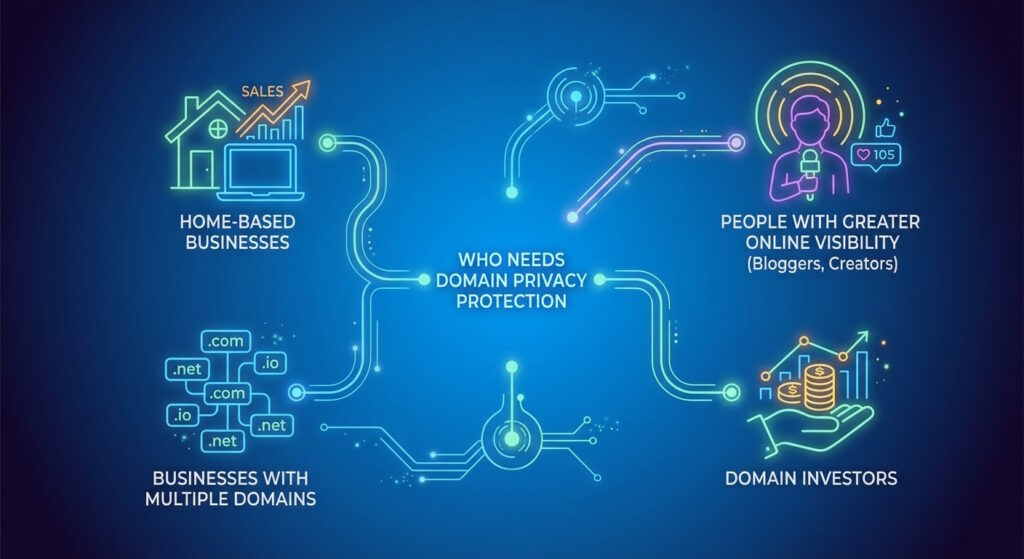
Domain privacy can be particularly valuable to:
- Home-based businesses: Using your home address for registration can expose where you and your family live.
- People with greater online visibility: Bloggers, creators, and writers can face greater risks of harassment or doxxing.
- Businesses with multiple domains: Public ownership records can reveal connections between websites and provide insight into upcoming activity.
- Domain investors: Revealing the domains in your portfolio can attract unsolicited offers and give prospective buyers information that could influence negotiations.
Ultimately, if privacy protection is available for your domain, there is little reason to leave your registration information publicly visible.
Conclusion
Your domain is part of your online presence, but your contact information doesn’t need to be.
Keeping those details private reduces unnecessary exposure and the risk of misuse.
After all, registering a domain shouldn’t mean giving up control of your personal details.
Author
Monica Jansen
Monica Jansen is a seasoned tech writer focused on web hosting and cybersecurity. She loves doing deep dives and whittling down difficult topics into simple and succinct concepts. Whether she is covering firewalls or different hosting plans, she always strives to provide clear guides that website owners of all skill levels can follow.
Add your comment
Get content delivered straight to your inbox


Your data.
Your choice.
Work with the best of the best — your projects deserve it.