Back to Blog



Monica Jansen
Oct 21, 2026
The Difference Between DDoS and Other Cyber Threats
Cyber threats come in many forms, and they can have different methods and objectives.
While some target sensitive data or credentials, others aim to compromise systems or disrupt online services.
While DDoS attacks are among the most well-known ones, not many people know what sets them apart from other cyber threats.
Knowing the difference can help you better understand the threats your website faces and their potential impact.
We will go over everything you should be aware of below—read on!
- Understanding DDoS Attacks
- Common Types of Cyber Threats
- How DDoS Attacks Differ From Other Cyber Threats
- DDoS Attacks in Perspective
Understanding DDoS Attacks
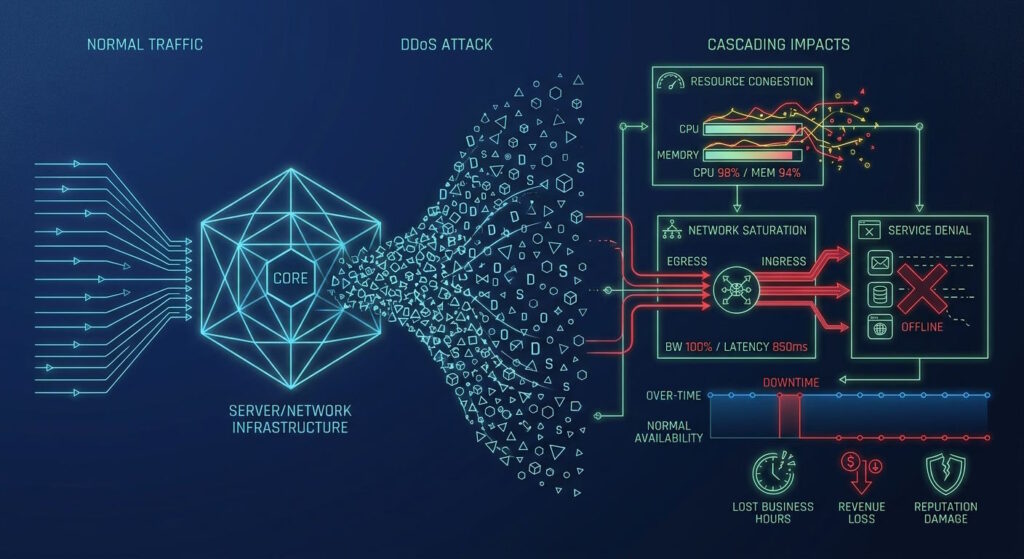
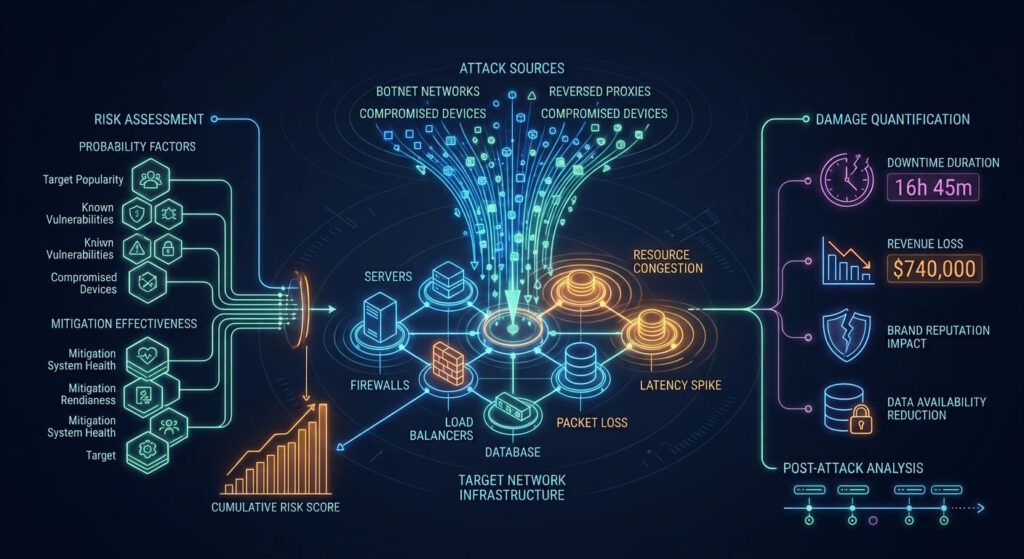
A Distributed-Denial-of-Service (DDoS) attack involves multiple devices sending large amounts of traffic or requests to a website, server, or network at the same time.
Often, these devices form part of a botnet made up of compromised computers and other internet-connected devices controlled by an attacker.
The resulting traffic can overwhelm available resources, interfering with regular access and preventing legitimate users from reaching the targeted service.
Common Types of Cyber Threats
DDoS attacks are only one of many cyber threats online services can face.
Some of the other common types include:
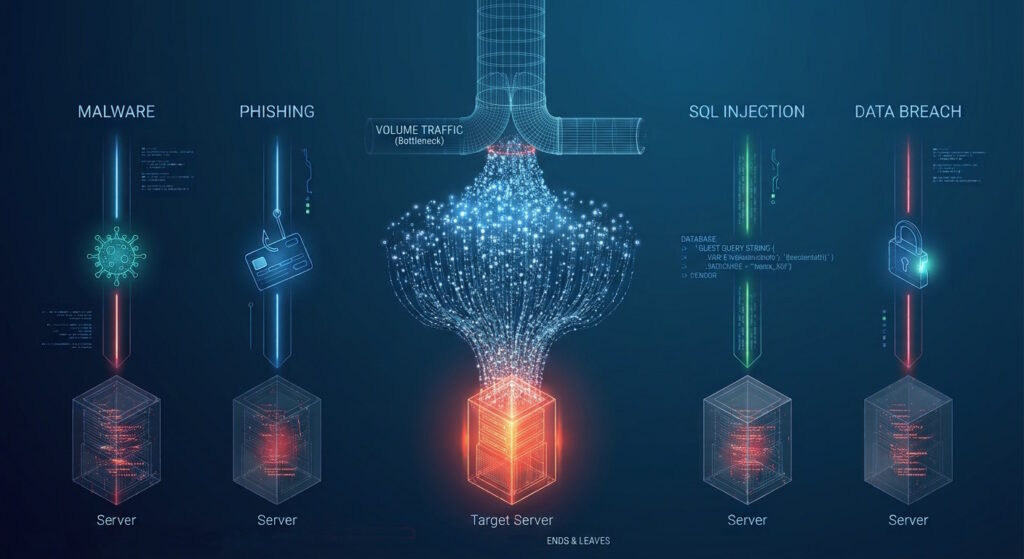
Malware
Malware is malicious software that attackers introduce to a system to steal data, damage files, spy on users, or interfere with operations.
The term covers a wide range of programs, such as viruses, worms, Trojans, spyware, and ransomware.
Malware can reach a system in several ways, including when a user opens a malicious attachment or downloads compromised software.
Once installed, it may operate without the user immediately realizing that the device has been infected.
Phishing
Another common threat, phishing, relies on deceptive messages to trick people into revealing sensitive information or taking actions that compromise their security.
Attackers typically impersonate trusted organizations or individuals, using emails, text messages, or fake websites to make the request seem legitimate.
In some cases, a message may lead the recipient to a fake login page designed to capture their credentials or prompt them to download malware.
MITM Attacks
A man-in-the-middle (MITM) attack occurs when an attacker intercepts communication between two parties without their knowledge.
As a result, the cybercriminal may be able to access sensitive data or alter what is being exchanged.
One way this can happen is through a fake Wi-Fi network, where an attacker may collect login details or other data from people who connect to it.
SQL Injection
Rather than targeting the user, an SQL injection exploits vulnerabilities in a website or application by inserting malicious code into database queries.
If successful, it can provide unauthorized access to information stored in the database, allowing it to be viewed, modified, or deleted.
Such attacks can occur when a website fails to properly check the information users enter before passing it to the database.
Password Attacks
Password attacks aim to compromise accounts by obtaining or guessing login credentials.
Some common forms include brute-force attacks, which repeatedly try different passwords, and credential stuffing, which relies on login details exposed in previous data breaches.
In particular, simple or default passwords can make these attacks more effective by increasing the chances of a successful guess.
How DDoS Attacks Differ From Other Cyber Threats
While DDoS attacks belong to the broader cybersecurity landscape, they work differently from many of the threats discussed above.
Objective
Unlike threats that seek to steal data or gain unauthorized access, a DDoS attack is primarily intended to disrupt an online service.
Its success does not depend on breaching the targeted system. Instead, the goal is to interfere with its availability and prevent normal operations.
In turn, the disruption can affect both the people who rely on the service and the organization behind it.
Method
Next, the sheer volume of traffic or requests involved is a defining feature of how DDoS attacks are carried out.
A single request may appear harmless and have little effect on the target.
However, once they arrive in large numbers, the growing load can place significant strain on the system’s resources.
As a result, the system can eventually reach its limits and struggle to process incoming requests.
Target
Another key difference lies in the scope of the target.
Namely, DDoS attacks are directed at websites, servers, networks, and other online services rather than a single user or account.
Consequently, a single attack can affect an entire service instead of an individual target.
Impact
The effects of a DDoS attack can extend beyond the immediate disruption of a service.
Slowdowns or downtime can interrupt business operations, prevent transactions, and lead to lost revenue.
The impacted organization may also face recovery costs and damage to its reputation.
Overall, the consequences tend to be operational and financial, compared with the direct security and privacy risks associated with compromised data or accounts.
Duration
Furthermore, DDoS attacks can last anywhere from minutes to hours or even longer.
Attackers may maintain a continuous flow or send traffic in repeated waves, meaning the attack doesn’t always need to follow a steady pattern.
When the attack ends, the malicious activity doesn’t remain within the targeted system.
In contrast, threats such as malware can persist after the initial compromise and continue operating until they are detected and removed.
Detection
Notably, changes in normal service behavior can make a DDoS attack easy to spot as it develops.
A sudden increase in traffic, slower response times, or repeated service outages can indicate that a website or server is under attack.
Other cyber threats can be harder to detect as they may work quietly within a system.
As a result, they can remain unnoticed while attackers continue to access data or carry out malicious activity.
Mitigation
Finally, effective DDoS mitigation depends on distinguishing malicious traffic from legitimate requests.
By comparison, many other attacks require addressing unauthorized access or removing malware from the system.
In these cases, the priority is to contain the threat and prevent further damage.
DDoS Attacks in Perspective
At first glance, data breaches and system intrusions may seem far more severe as they directly put sensitive information or resources at risk.
Still, DDoS attacks don’t need to steal data or gain unauthorized access to cause serious harm.
Extended downtime can disrupt operations, cut off revenue, and damage customer trust.
For businesses that rely heavily on online availability, a prolonged attack can even threaten their ability to continue operating, which is why some form of DDoS protection is important.
You shouldn’t underestimate the risks of a DDoS attack simply because it doesn’t involve a direct breach.
Conclusion
Cybersecurity is the foundation of keeping your business protected in today’s digital world.
As technology continues to evolve, so do the ways attackers can cause harm.
Thus, making security a priority requires consistent attention as new vulnerabilities and risks emerge.
While DDoS attacks are just one example of possible concerns, they can have consequences no business wants to experience.
Ultimately, knowing what to look out for means fewer surprises when a threat comes your way.
Author
Monica Jansen
Monica Jansen is a seasoned tech writer focused on web hosting and cybersecurity. She loves doing deep dives and whittling down difficult topics into simple and succinct concepts. Whether she is covering firewalls or different hosting plans, she always strives to provide clear guides that website owners of all skill levels can follow.
Add your comment
Get content delivered straight to your inbox


Your data.
Your choice.
Work with the best of the best — your projects deserve it.